

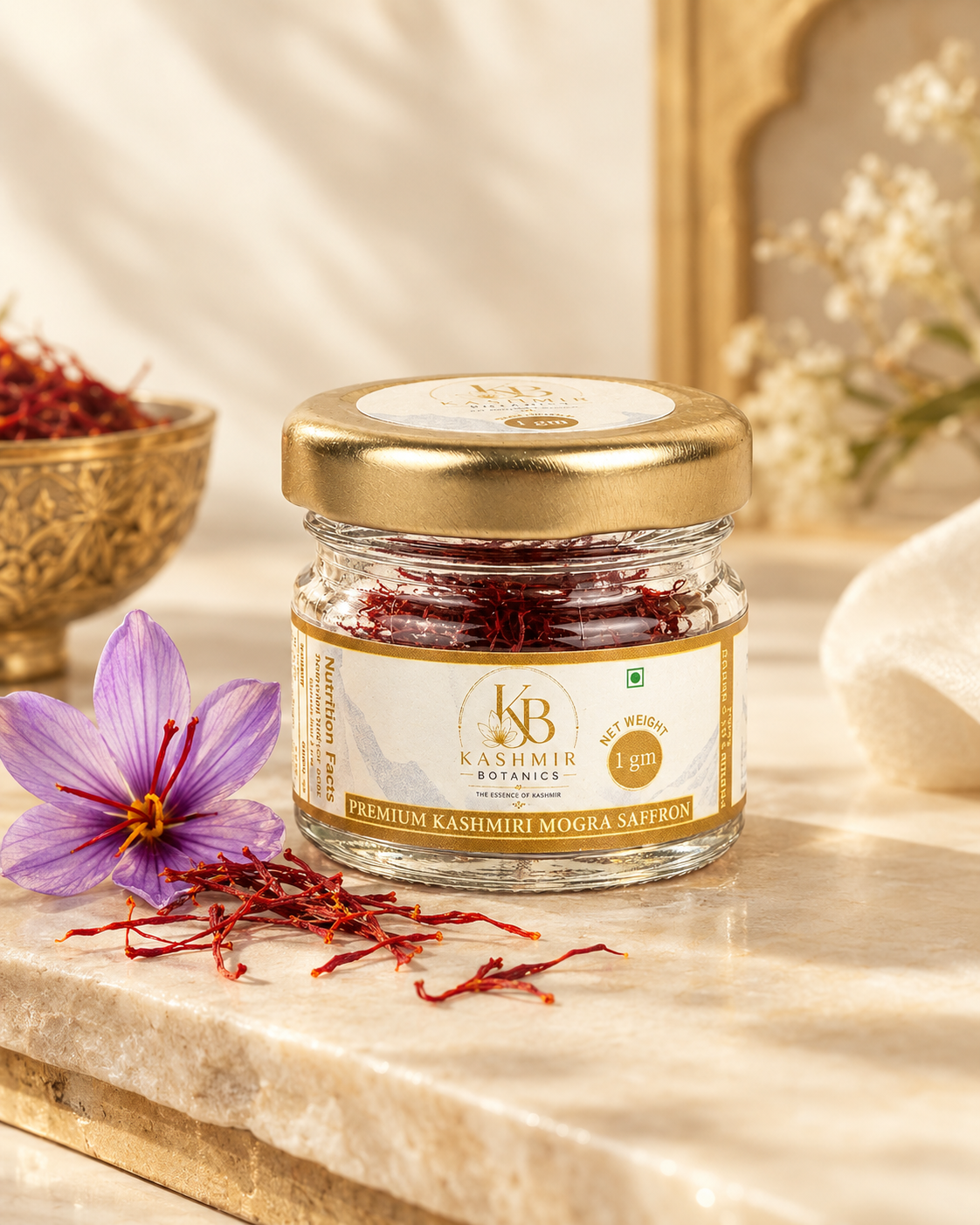
Why the Mogra grade is the saffron connoisseurs ask for
What Is Mogra Saffron?
Saffron, or kesar, is the dried stigma of the Crocus sativus flower. Each flower produces just three delicate crimson threads, and every one of them is picked by hand. It takes well over 150,000 flowers to yield a single kilogram of saffron, which is why it is often called red gold. Mogra (also written Mongra or Lacha) is the premium grade of Kashmiri saffron. It is made only from the deep-red tips of the stigma, with the paler yellow-white style removed. What remains is pure, intensely coloured thread with a stronger aroma and flavour, so a very small pinch goes a long way. Kashmir Botanics Kashmiri Mogra Saffron is marketed in the AAA+ quality grade.
Grown in Pulwama and Pampore
Our saffron comes from the saffron fields of Pulwama and Pampore, the heartland of Kashmiri saffron. The crocus blooms for only a few weeks each autumn. Farmers pick the flowers at dawn, separate the stigmas by hand and dry them with care. The cool climate, the karewa soil and generations of know-how are what give Kashmiri saffron its character: deep colour, rich aroma and a slightly honeyed, earthy taste.
Potential Benefits of Saffron
- Mood and well-being: Saffron has been studied for its role in supporting a positive mood. In Indian homes it has long been enjoyed as a feel-good ingredient.
- Antioxidants: It contains natural plant compounds such as crocin, crocetin and safranal, which act as antioxidants.
- Skin glow: Kesar has a long place in traditional Indian beauty routines, and many people enjoy it in milk as part of a daily glow ritual.
- Everyday immunity support: Saffron milk is a classic household comfort drink, especially in the colder months.
- Digestion and appetite: Traditionally used in small amounts to add warmth and to make food more appetising.
- Sleep and relaxation: A warm glass of kesar doodh before bed is a popular wind-down habit.
What Is Found in Saffron?
- Crocin gives saffron its golden-red colour.
- Safranal gives it that unmistakable aroma.
- Picrocrocin gives it a gentle bittersweet taste.
- Small amounts of vitamin C, manganese, potassium and other plant compounds.
How to Spot Real Saffron at Home
- Drop a few threads in lukewarm water. Real saffron releases colour slowly and the threads stay red. Fake or dyed threads colour the water almost at once and lose their colour.
- Look at the thread. Mogra should be uniformly deep red, with no yellow or white ends.
- Smell and taste. Real saffron smells floral and honey-like, with a mild bitterness, never sweet or chemical.
How to Use Kashmiri Mogra Saffron
- Kesar doodh: Soak 4 to 5 threads in a spoon of warm milk for 10 minutes, then stir into a glass of hot milk.
- Kahwa and tea: Add a few threads while brewing for colour and aroma.
- Biryani, pulao and kheer: Bloom in warm water or milk and add near the end of cooking.
- Desserts and sweets: Perfect for phirni, halwa, rasmalai and shrikhand.
- Skin care ritual: Many people soak a few threads in raw milk or rose water as part of their routine. Always do a patch test first.
Frequently Asked Questions
How much saffron should I use daily?
A few threads (about 4 to 5) a day is the common culinary amount. A little goes a long way.
How should I store it?
Keep it in an airtight jar, away from light, heat and moisture.
Is Mogra better than other grades?
Mogra uses only the red tips of the stigma, so it is more concentrated in colour and aroma, and you need fewer threads per serving.